Electric underfloor heating mat installation
Jul 22, 2024
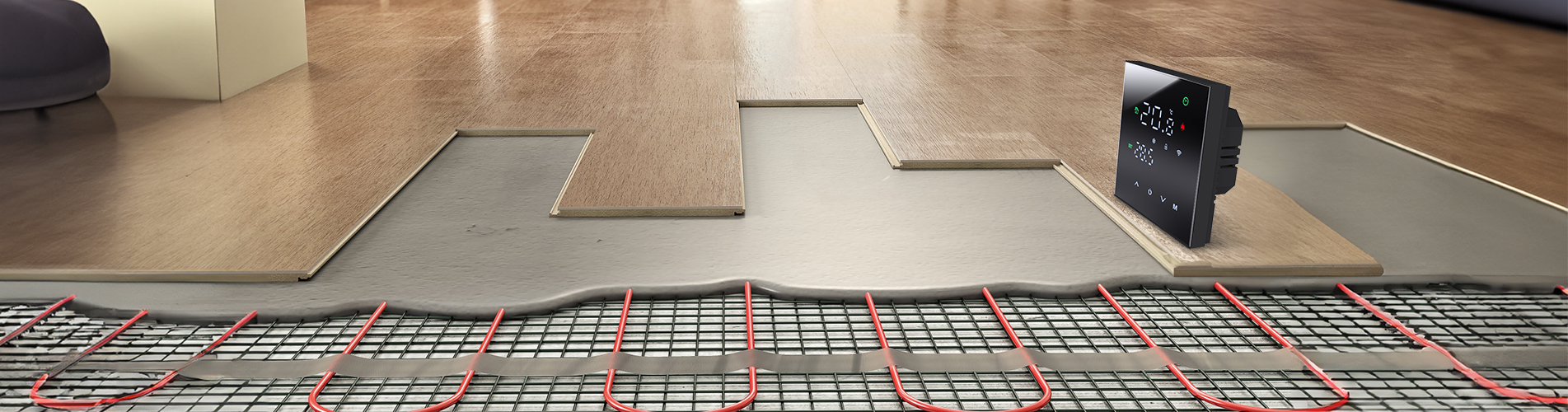
Can you put underfloor heating under tiles ?Underfloor heating for concrete floors. Laminate flooring electric underfloor heating.Can you put electric underfloor heating under vinyl click flooring? Through customer feedback, it was found that there is a dilemma among people when using underfloor heating with different materials. Firstly, the same system can be used for electric underfloor heating under concrete flooring, wooden flooring, ceramic tiles, vinyl flooring (PVC flooring), and stone plastic flooring (SPC flooring). Next, let's take a look. The difference between installing electric underfloor heating under concrete flooring, wooden flooring, ceramic tiles, vinyl flooring (PVC flooring), and stone plastic flooring (SPC flooring) mainly lies in thermal conductivity, installation requirements, and applicability. Specifically, as follows:
1. Electric underfloor heating under concrete floor
Thermal conductivity: Concrete has good thermal storage capacity, but its thermal conductivity is relatively poor, so it takes a long time for heat to be conducted to the surface.
Installation requirements: The installation process is relatively complex and requires pre embedding of the underfloor heating system before pouring concrete. Once the pouring is completed, subsequent modifications will be difficult.
Applicable scenarios: Suitable for residential, commercial buildings, and industrial floors, especially in areas that require large-scale installation of underfloor heating.
2. Electric underfloor heating under wooden flooring
Thermal conductivity: Wood has average thermal conductivity, but due to its thin thickness, heat transfer is relatively faster than concrete.
Installation requirements: Insulation and reflection layers need to be added below the floor to optimize heat transfer upwards.
Applicable scenarios: Widely used in places such as living rooms, bedrooms, and offices that require comfort and natural atmosphere.
3. Electric underfloor heating under ceramic tiles
Thermal conductivity: Ceramic tiles have good thermal conductivity and can quickly transfer heat to the surface, but they also cool quickly.
Installation requirements: High flatness is required for the base layer, and strict construction techniques are required to ensure a good fit between the tiles and the underfloor heating.
Applicable scenarios: Suitable for areas such as bathrooms and kitchens that require quick heating and easy cleaning.
4. Electric underfloor heating under vinyl flooring (PVC flooring)
Thermal conductivity: PVC material has average thermal conductivity, but its applicability and coefficient of thermal expansion and contraction can be improved by adding a fiberglass stabilizing layer.
Installation requirements: The foundation requirements are high, and there are few skilled construction workers. It is necessary to ensure good ground flatness and reflective layer settings.
Applicable scenarios: Suitable for commercial and public areas, such as hospitals, schools, shopping malls, and other places that require waterproofing and moisture resistance.
5. Electric underfloor heating under SPC flooring
Thermal conductivity: SPC flooring structures typically include a UV layer, wear-resistant layer, decorative layer, and core layer, with the core layer consisting of a mixture of stone powder and PVC, which has good thermal conductivity.
Installation requirements: Due to the use of snap on connections for SPC flooring, installation is relatively convenient and does not require the use of glue, which helps maintain the efficiency of the underfloor heating system.
Applicable scenarios: Suitable for homes, offices, and commercial places, especially in areas with high demand for quick installation and dismantling.
Overall, choosing a suitable electric underfloor heating system requires consideration of the thermal conductivity of the flooring material, installation convenience, and usage environment. Concrete flooring is suitable for long-term heating in large areas; Wooden flooring provides a natural appearance and moderate thermal conductivity; Ceramic tiles are suitable for areas that require quick heating and easy cleaning; Vinyl flooring (PVC flooring) and stone plastic flooring (SPC flooring) have advantages in specific locations due to their waterproof performance and ease of installation.
Read More




 IPv6 network supported
 English
 English
 Français
 Deutsch
 Русский
 Italiano
 Español
 Português
 عربي
عربي Polski
 Magyar
 zh-CN
zh-CN